
Driveway & concrete
Oil spots, red clay, tire marks, and years of grey film lifted off driveways, sidewalks, patios, and pool decks with a surface cleaner — no zebra striping.
Up to 4,400 PSIPressure washing and soft washing for Gastonia, NC — with commercial-grade equipment, $2M insurance, and zero shortcuts. Flat-rate quote within one business day.
The right pressure for every job — from heavy-duty concrete blasting to gentle soft washing that protects delicate surfaces.
Oil spots, red clay, tire marks, and years of grey film lifted off driveways, sidewalks, patios, and pool decks with a surface cleaner — no zebra striping.
Up to 4,400 PSIVinyl, brick, stucco, and hardboard cleaned with low pressure and the right solution — the green mildew and black streaks gone without forcing water behind the siding.
Under 500 PSIThose black streaks are algae eating your shingles' limestone filler. Removed chemically at low pressure — never blasted, which strips granules and voids warranties.
Under 500 PSIWood is soft and it shows every mistake. Pressure dialed in by species and age, working with the grain, so the grey weathering lifts and the fibers stay intact.
800–1,500 PSICleared out by hand, then the tiger-striping scrubbed off the outside face — the vertical black streaks that don't come off with a normal house wash.
Hand + soft washStorefronts, dumpster pads, drive-thrus, sidewalks and awnings — cleaned before you open, so a customer never watches you wash gum off the entrance.
Scheduled off-hoursHand washing and touchless rinsing for cars, trucks, trailers, and fleet vehicles — at your home or your yard, without the swirl marks a tunnel wash leaves.
Touchless + handWhat 4,400 PSI does to the three surfaces we clean most. Each slider is a reference pair showing what that surface looks like dirty and clean. They are marked “Sample photo” because they are not our jobs — our own before-and-afters replace them as we shoot them. Your driveway could be our next before & after.
↔ Every slider is live We photograph every job — this gallery fills up with real Charlotte homes as we wash them.
These are the places we drive past on the way to jobs. If you recognise them, we're your neighbours — and we're the crew that actually knows what your siding is up against.
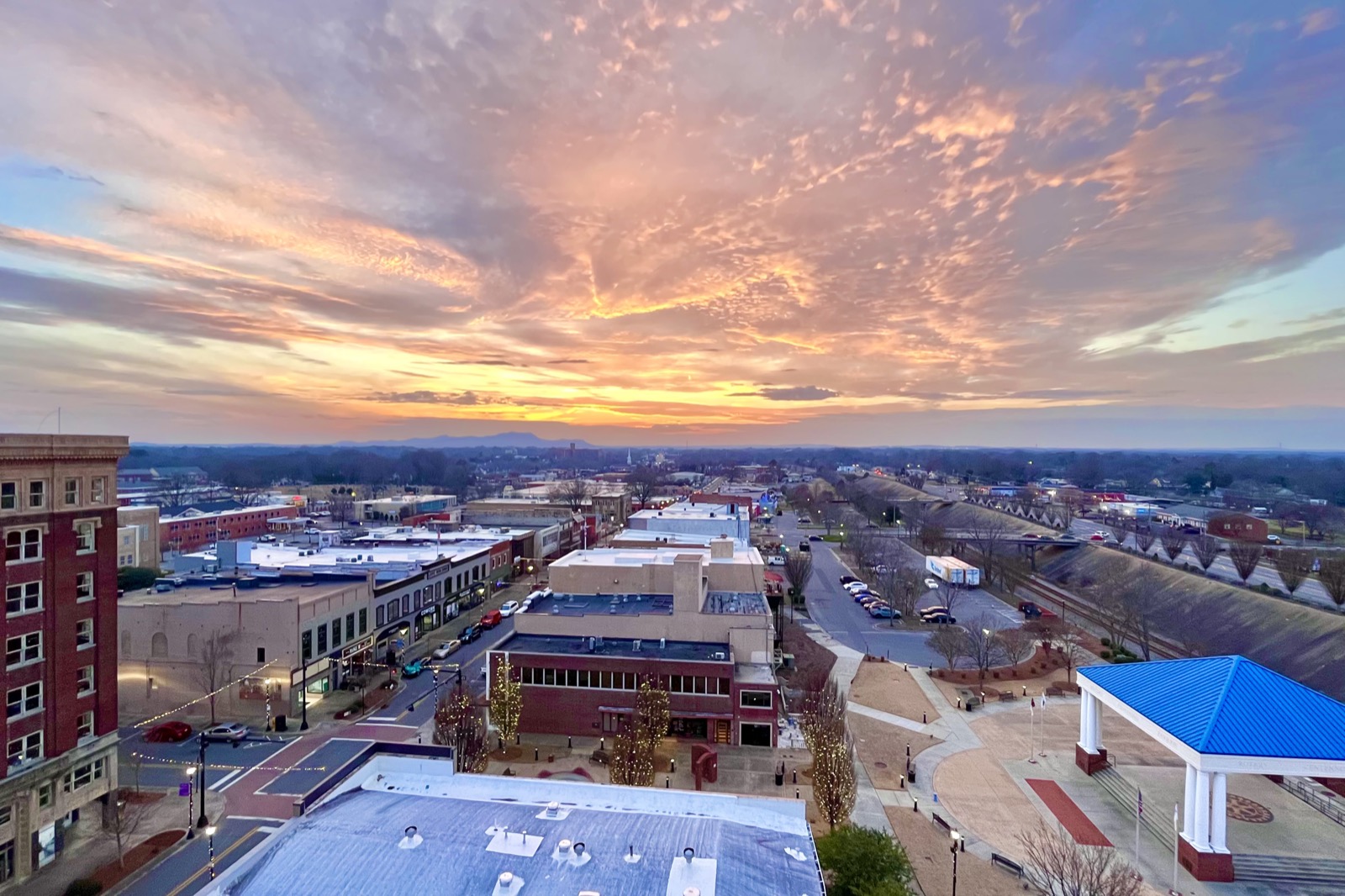
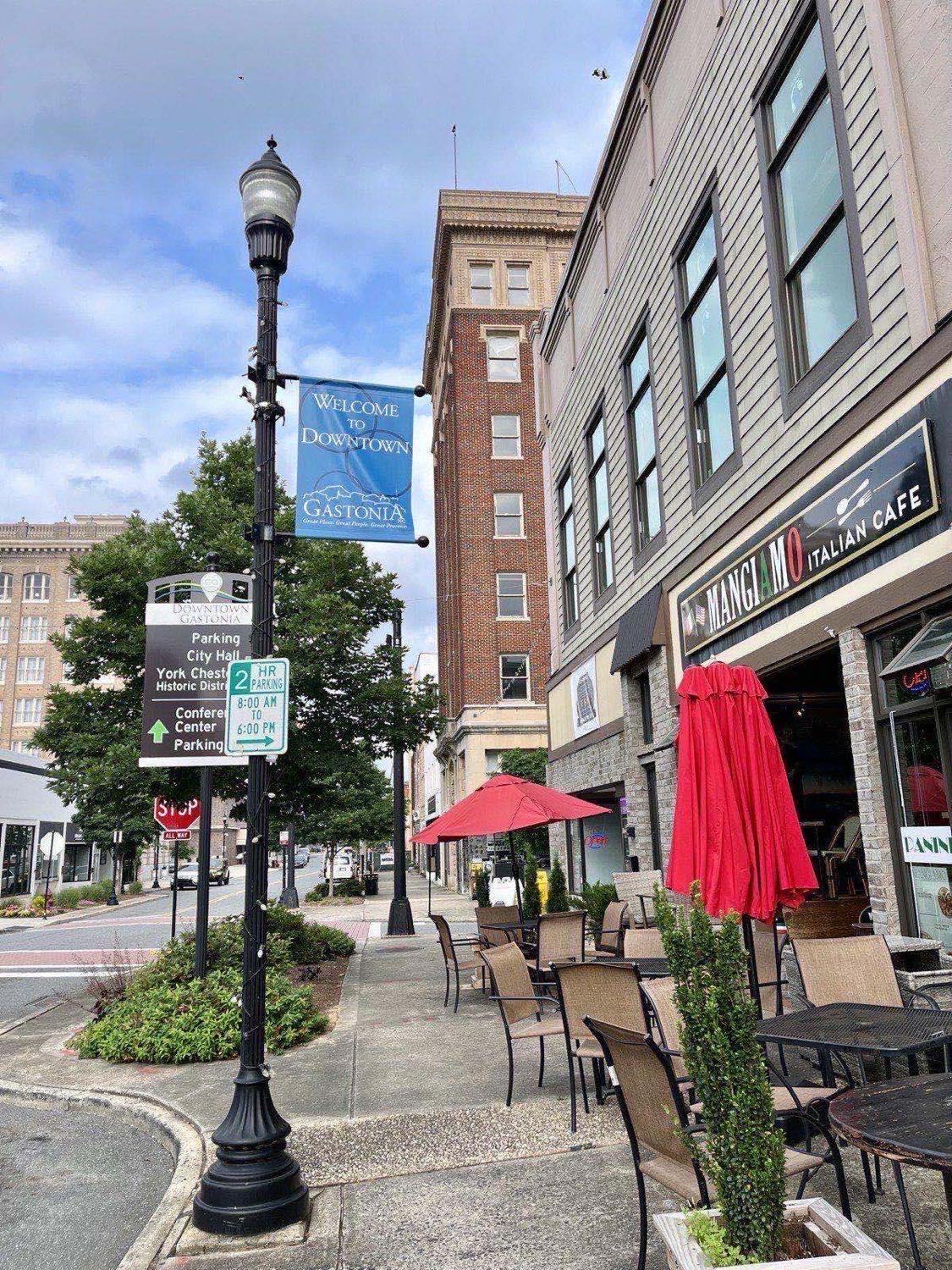
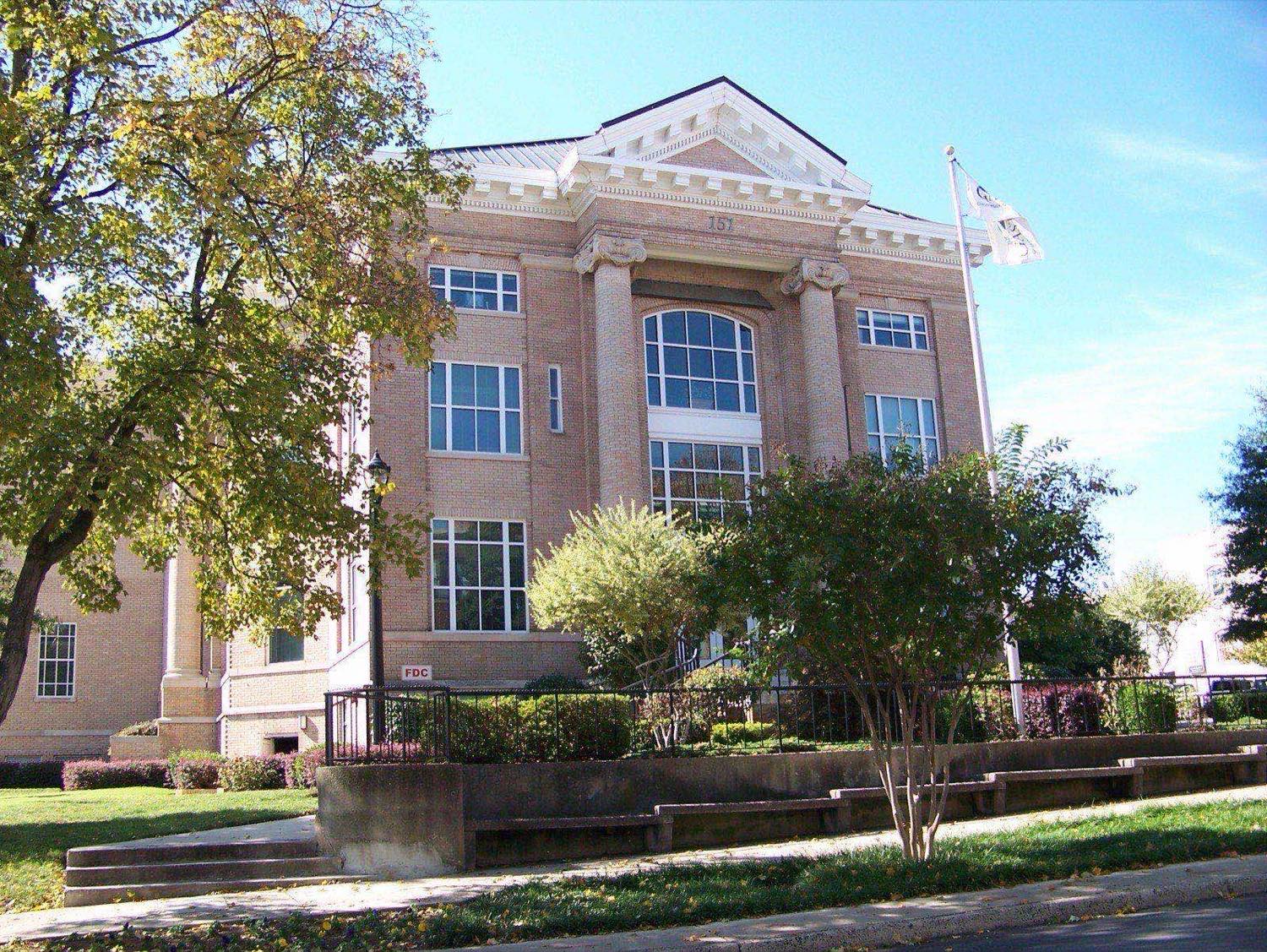
Gastonia is a mill town first and a suburb second. It was incorporated in 1877 and named for William Gaston, a congressman and state supreme court justice; the county around it was carved out of Lincoln County in 1846, and Gastonia took the county seat away from Dallas in 1911. Textiles built the place, and the 1929 strike at the Loray Mill — the five-story brick building put up in 1900 and 1901 and expanded again in the early twenties — is what put the city in national headlines. Downtown reads differently now: CaroMont Health Park opened in 2021 inside the sixteen-acre FUSE district, the Schiele Museum has been city-run since 1964, and the farmers market still sets up on East Long Avenue. Southwest of the city, out in Gaston County, King's Pinnacle at Crowders Mountain reaches 1,690 feet — better than 800 feet above the rooftops here, and visible from town on a clear day. At roughly 85,600 people, Gastonia is the largest city in Gaston County by a wide margin and the third largest in the Charlotte metro.
The housing stock tells the same story the mills do. Of about 35,300 units in the city, roughly 52% went up before 1980 and something close to 15% before 1950, and only about 1,000 are 2020-or-newer (ACS 2020–2024 five-year estimates). For us that splits into four genuinely different jobs. The Loray Mill village is close to thirty blocks of narrow-lot frame mill houses built between the early 1900s and the 1920s, 649 contributing buildings — and whatever is on their walls now, original painted wood or hardboard or vinyl added decades later, none of it will take a high-pressure tip. York-Chester holds more than 540 structures, a lot of them early-1920s Bungalow, Craftsman, Colonial Revival and Queen Anne, which in practice means deep covered porches, porch ceilings and painted trim. Brookwood is a smaller pocket, 106 houses mostly built from the mid-1930s into the late 1940s. Then there is the 1950s-through-70s ranch belt and the newer subdivisions out on the east and southeast edges off New Hope Road, Robinwood Road and Union Road — Nolen Farm, Riverwood Plantation, Catawba Hills, Cramer Woods, Bethesda Oaks — where most of our driveway surface cleaning and house soft washing gets booked.
Weather does the rest. Gaston County averaged about 45.6 inches of precipitation a year across 1991–2020, with no dry season, and relative humidity sits near 70% most of the year. Add the mature street canopy — Gastonia has taken the Tree City USA Growth Award three years running, 2023 through 2025 — and north-facing roof slopes and shaded walls stay damp long after the rain quits. Green mildew on the shady elevation and dark Gloeocapsa magma streaks running down the north slope are the normal condition on a street like that, not evidence anybody neglected the house. Under the whole city is Cecil, North Carolina's official state soil since 1997, a Piedmont upland series whose red clay subsoil gets its color from iron oxide — which is why concrete here picks up an orange cast that soap and a garden hose will not lift. Oak and pine are the heaviest tree pollens in the Charlotte area and they peak in April, so the yellow film on porches, railings and parked trucks runs from about mid-March into late April.
Gastonia's brick ranches and established neighborhoods respond beautifully to a professional wash — decades of buildup gone in an afternoon. On a house from the mill era, though, the job starts with what we don't do. No high-pressure wand on painted wood or hardboard. No ladder-and-blast on shingles. Siding and roofs get soft washed under 500 PSI, where the cleaning solution does the work and the water only rinses. Porch floors, steps, decks and fences sit between 800 and 1,500 PSI, dialed by species and how weathered the boards are. The driveway is the one place the full 4,400 PSI comes out, and it comes out through a rotating surface cleaner so you don't end up with the zebra striping a hand-held wand leaves behind.
Anything delicate gets tested in a small, out-of-the-way spot before we commit to it, and if a hundred-year-old porch column or a mortar joint that's already crumbling shouldn't be washed at all, you'll hear that before we start rather than after. Quotes are flat and in writing inside one business day. Gabriel Carver owns the company and is the person who walks the property with you and runs the equipment — same number every time, no dispatcher. Hyper Tension carries $2M in liability coverage and you can have the certificate the same day you ask, which is a reasonable thing to require of anyone putting a ladder against a ninety-year-old roof. If something isn't right on the final walkthrough, we re-clean it at no charge.
Don't see yours? If you're in or around Gastonia, we'll come — just ask.
We won't pretend we've been washing Charlotte for 20 years. Here's what we bring instead — and why new might be exactly what you want.
Concrete takes up to 4,400 PSI through a surface cleaner. Siding and roofs get soft washed under 500 PSI. Wood sits between 800 and 1,500. One setting for every surface is how damage happens.
Hot-water capable machines, proper surface cleaners, soft-wash injection, and enough hose to reach the back of your property without moving the truck four times.
One number reaches the people who do the work — not a call centre, not a dispatcher, not a form that generates a callback in three days. Questions get answered the same day, by someone who has seen your property.
We look at the job, then give you one number for all of it. No hourly meter, no surprise square-footage adjustment when we arrive with the trailer.
Ask for the certificate of insurance and you'll have it the same day. An uninsured contractor on your roof is a risk that lands on your policy.
Failing mortar, brittle end-of-life shingles, rotten deck boards, active leaks — some surfaces need a different trade first. Saying so costs us the job and keeps our name intact.
We're building our before & after gallery one Gastonia home at a time. Book now, lock in a founding-customer rate, and if you let us photograph the transformation, we'll take care of you on every future wash too.
Send the address and what needs cleaning. Photos help but aren't required — we can usually read a property from the street view and your description.
One number for the whole job, back to you within one business day. It covers everything discussed, and it doesn't move unless you add work.
On the day and at the time agreed. Plants pre-wetted, delicate surfaces tested first, pressure set per surface, everything rinsed down when we're done.
We go around the property together before we pack up. Anything you're not happy with, we re-do on the spot — not on a follow-up visit.
If it's not spotless, we come back and re-blast it at no charge. We're a new company — our name is worth more than any single invoice, and we act like it on every job.
Pressure washing, no. Soft washing, yes. Whatever a York-Chester or Loray Mill house is clad in — original painted wood, hardboard, or vinyl fitted over one of them later — a high-pressure tip will lift paint, fuzz the grain, and drive water into places it has no way out of. We wash those walls under 500 PSI — closer to a good garden hose than a pressure washer — and let the cleaning solution kill the mildew at the root instead of knocking it off the surface. Porches get the most attention on these houses: the ceiling, the trim, the columns and the floor all behave differently, and the floor is the only part that sees 800 to 1,500 PSI. We test a hidden section first, every time, and we'll tell you if something is too far gone to wash.
Because that's the side that stays damp. The streaks are Gloeocapsa magma, a cyanobacteria that eats the powdered limestone used as filler in asphalt shingles. It takes hold on shaded and north-facing slopes first and spreads downward, which is why the staining runs in vertical stripes. Under Gastonia's tree canopy and roughly 45 inches of annual rain, that slope rarely dries out long enough to stop it. The Asphalt Roofing Manufacturers Association is explicit that you should not use a power washer or a brush on shingles — pressure sweeps off the ceramic granules that carry the shingle's UV protection, and most manufacturers void the warranty over it. We treat it chemically at low pressure and rinse gently, and it keeps improving for a few weeks after we leave. More detail on roof soft washing.
That's iron oxide out of the soil. Gastonia sits on the Cecil series — North Carolina's state soil — whose red clay subsoil is colored by iron, and once that clay works into the pores of a concrete slab it stains rather than sits on top. Pressure alone will make the slab lighter and leave the orange behind. It needs the right treatment with dwell time, then a surface-cleaner pass, and the same goes for rust bleed from irrigation heads and metal furniture. Older mill-house steps and walks are the one caution: if the concrete is already spalling or the mortar in brick hardscape is failing, we drop the pressure and manage expectations instead of doing damage for the sake of a cleaner photo.
It depends on square footage, surface, and condition — which is why we quote flat rather than publishing a price list that would be wrong for your property. Send us the address and what needs cleaning and you'll have one number for the whole job within a business day, with no obligation. We'd rather give you an accurate price than a cheap-looking one that changes on the day.
It absolutely can — which is why we don't pressure wash either of them. Siding and roofs get soft washed under 500 PSI, where a cleaning solution does the work and the water only rinses. High pressure on siding forces water behind lap joints and past window seals; on a shingle roof it sweeps off the ceramic granules that give the shingle its UV protection, and most manufacturers void the warranty for it. High pressure is for concrete.
In the Charlotte metro, most homes want a house wash every 12 to 18 months and a driveway once a year. Shade is the variable that matters most: a north-facing wall under mature tree canopy stays damp after rain and grows algae far faster than a wall in full sun, so heavily shaded neighborhoods often need it annually. Pine-heavy properties usually want gutters cleared twice a year rather than once.
We use your outdoor spigot — a standard hose connection is plenty, and it costs a few dollars of water for a typical job. We bring our own power. If your spigot is broken, has low flow, or you're on a well with limited recovery, tell us in advance and we'll plan for it rather than discovering it in your driveway.
We're based in Charlotte and serve the whole metro — Matthews, Mint Hill, Huntersville, Concord, Pineville, Ballantyne, Fort Mill SC, Gastonia, and Indian Trail. If you're near the edge of that list, ask anyway; if you're close, we'll come.
Tell us about the job and we'll come back within one business day with a flat price. Prefer to pick a time? Book a wash online.